



LSU Paths to PhD: Ajay Dhungana Decodes Sweet Potato Genetics to Fight Disease and Protect Crops
May 06, 2026
Ajay Dhungana is a doctoral candidate at the LSU AgCenter, soon to be Dr. Dhungana upon graduating with his PhD this May.
We asked him to share a bit about his doctoral research and experience at LSU studying sweet potato genomes.
Did you know? The sweet potato is a hexaploid crop, meaning it has six copies of each chromosome!


What is your favorite fun fact about the sweet potato?
Sweet potatoes are actually not related to either the common potato or yam, even though people often group them together. This crop belongs to a completely different plant family (the morning glory family).
What interested you initially about your thesis research topic?
The sweet potato is a polyploid crop with a complex genome, which makes genetic improvement more challenging but also more interesting. There has been relatively limited work in sweet potato genetics, especially in identifying genomic regions associated with disease resistance and understanding genetic stability. That gap created a valuable opportunity to apply modern genomic tools, such as genome-wide association studies (GWAS) and epigenetic analyses, to generate new insights.
Coming from a background in plant breeding and quantitative genetics, I was motivated to work on a crop where my research could advance science and improve crops in practice.
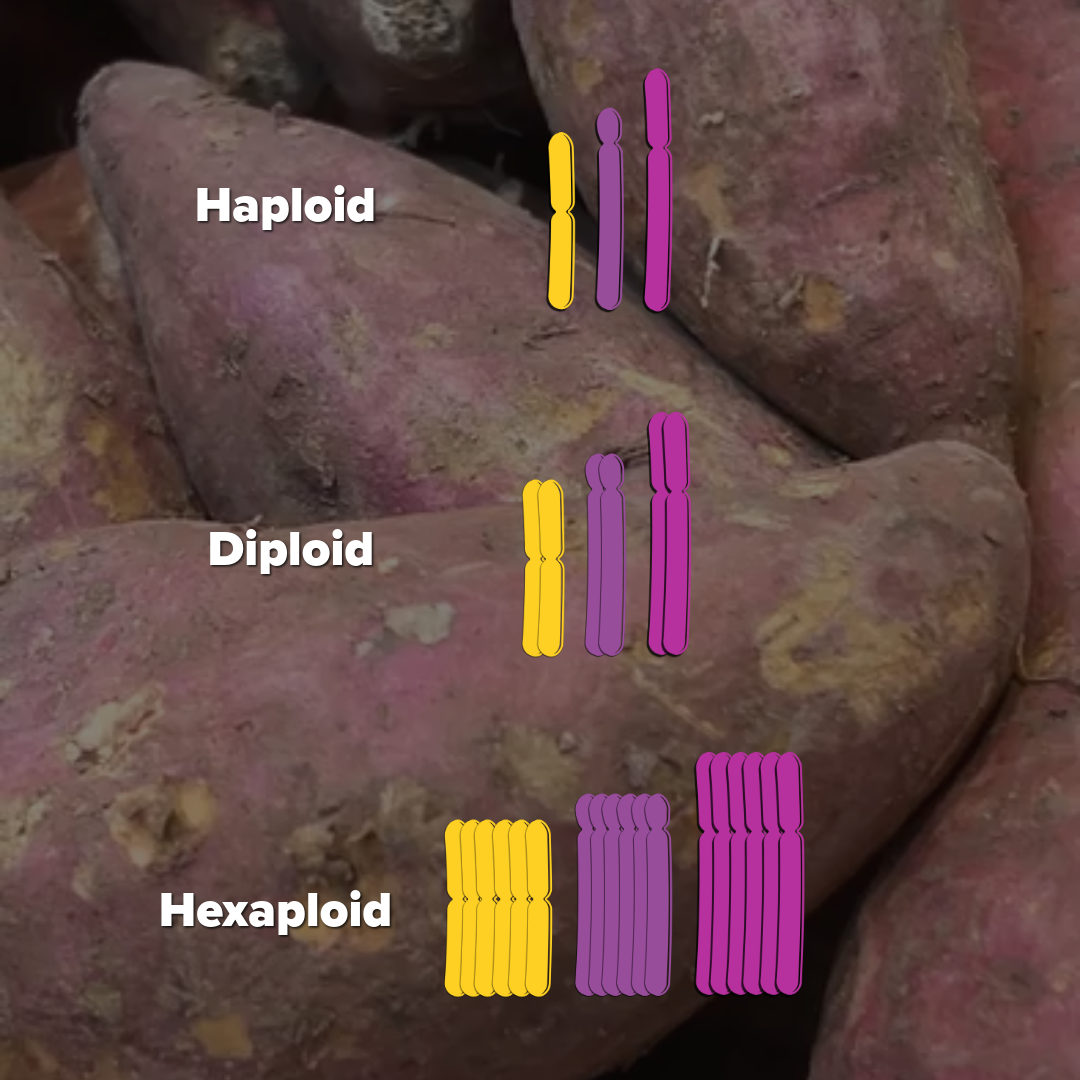
Why is it difficult to improve sweet potatoes genetically / through selective breeding?
Sweet potatoes are a hexaploid crop (meaning they have six copies of each chromosome) and have high heterozygosity (with different versions of the same genes). This makes the inheritance pattern much more complex compared to other diploid (two-chromosome copies) crops.
How did you use genetic studies to find ways sweet potatoes might be resistant to wilt and rot diseases?
Genome-wide association studies (GWAS) are a method used to scan the genome and identify genetic markers linked with important traits such as disease resistance (in my case). I tested the Louisiana sweet potato population using 3,000 genetic markers, along with phenotypic data (observable physical characteristics) collected over multiple years for traits such as resistance to Fusarium wilt and black rot. We identified several markers associated with resistance to these diseases.
These findings are important because they enable breeders to use marker-assisted selection to identify resistant lines more efficiently, rather than relying solely on field screening, which can be time-consuming and sometimes inconsistent. Ultimately, this research can help with developing sweet potato varieties that are more disease-resistant, reducing crop losses and benefiting farmers.
What is epigenetics, and what did it teach you about sweet potato environmental stressors and adaptations?
Epigenetics refers to changes in gene expression without altering or changing the DNA sequence (the underlying “blueprint”) itself. One key mechanism is DNA methylation. In my research, I studied how methylation patterns change under different conditions, such as drought stress, in sweet potato crops.
What were some of the biggest challenges in your project, and how did you overcome them?
One major challenge was working with complex polyploid genomic data. Similarly, integrating and analyzing large genetic, phenotypic, and methylation data requires specialized statistical tools. I address these challenges by learning and applying different bioinformatics tools and collaborating with my advisors.
What were some of the most surprising or impactful things that you found or learned during your project?
I was able to identify genetic markers associated with disease resistance. Another surprising finding was that the DNA methylation pattern in sweet potatoes is genotype-dependent. These findings provide a foundation for future functional studies and practical breeding applications.
What are your plans after graduation? What will you take away from your PhD research experience at LSU?
I plan to continue working in plant breeding and genomics after graduation, ideally in a postdoctoral position where I can apply advanced genomic tools to crop improvement.
My PhD at LSU has given me strong skills in data analysis and quantitative genetics, as well as hands-on experience in plant breeding applications. It also taught me patience, persistence, and adaptability, which are essential for research.
Read more about Ajay Dhungana's research: Maintaining genetic stability in sweet potato: epigenetic insights into propagation and drought tolerance