


LSU Research Bites: An Unexpected Ally, Black Mangroves, Could Slow Louisiana Marsh Erosion
March 06, 2026
Black mangroves are the new kids on the block in Louisiana’s coastal ecosystems, as warming winters allow them to move farther up into the delta.
But even though they’re new here, they may already be pulling their weight by helping prevent edge erosion, says a new study from LSU Oceanography & Coastal Sciences researcher Mike Rabalais. He co-authored the paper with LSU Associate Professors Tracy Quirk and Giulio Mariotti.
Edge erosion occurs when strong waves, such as those during a hurricane, wash away plants and soil at the edge of a marsh. This is a major issue —it causes up to 50% of all coastal erosion.


Rabalais’ work shows black mangroves can reduce edge erosion by about 40 to 60 percent. How? It all comes down (literally) to their roots, which run deeper than other marsh plants and strengthen the soil they’re in, making it more resistant to breakage.
The only catch? They need time to get settled. The study shows the plants work best to prevent edge erosion when they are well-established.
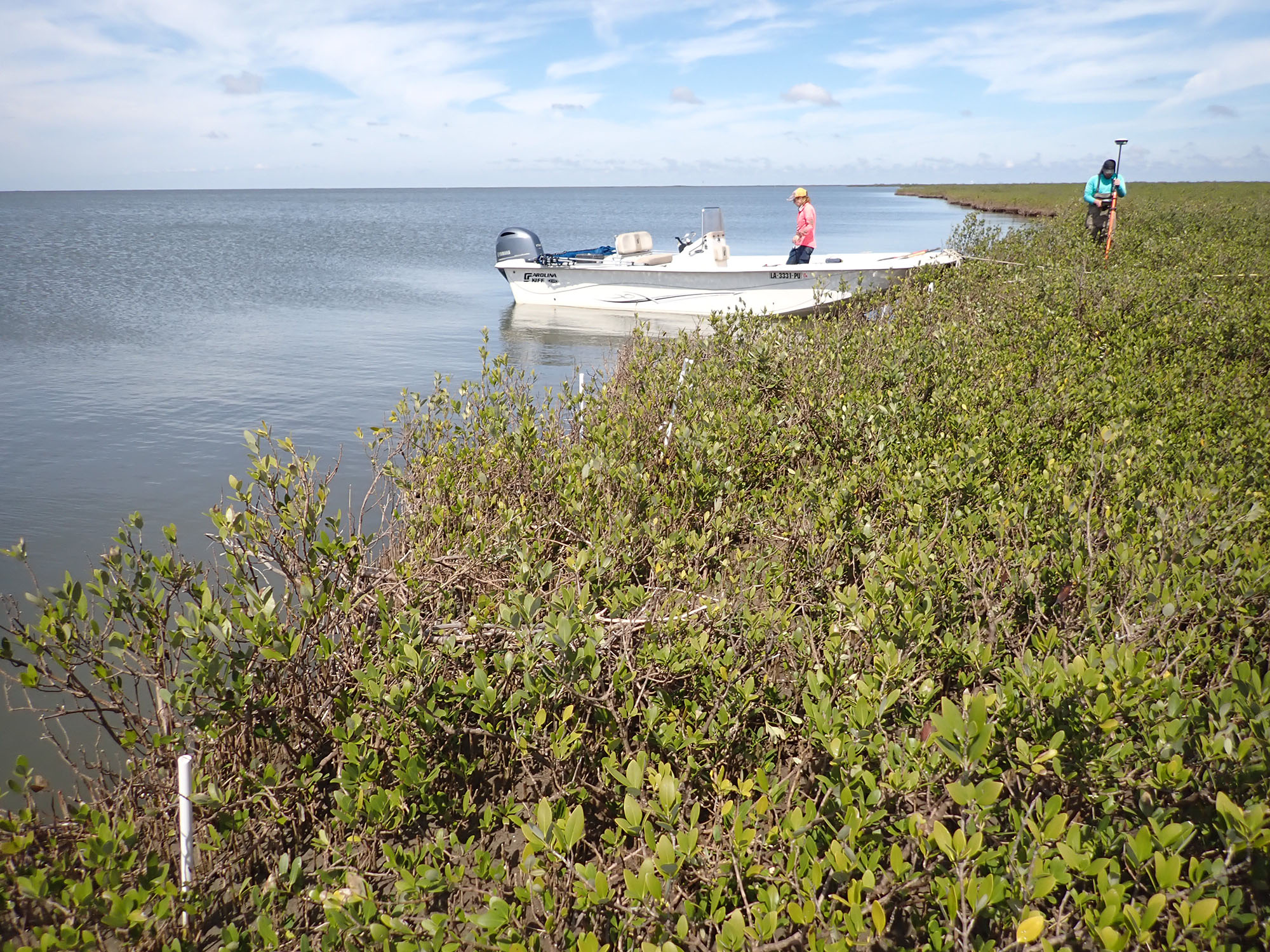
“Sites with sparse mangrove coverage did not show reduced erosion,” Rabalais says. If coastal managers were to use them as a restoration tool, he continued, “mangroves should not be planted directly along the marsh edge. Instead, they should be planted farther inland, allowing time to grow and form dense stands before influencing edge stability.”
And black mangroves have other benefits as well. Rabalais says they store more carbon than other coastal plants and, on barrier islands, are providing rookery habitats for brown pelicans!
This research was conducted with funding from the National Science Foundation.
Read the study: Climate-driven Avicennia germinans expansion reduces marsh edge erosion in coastal Louisiana (USA)